

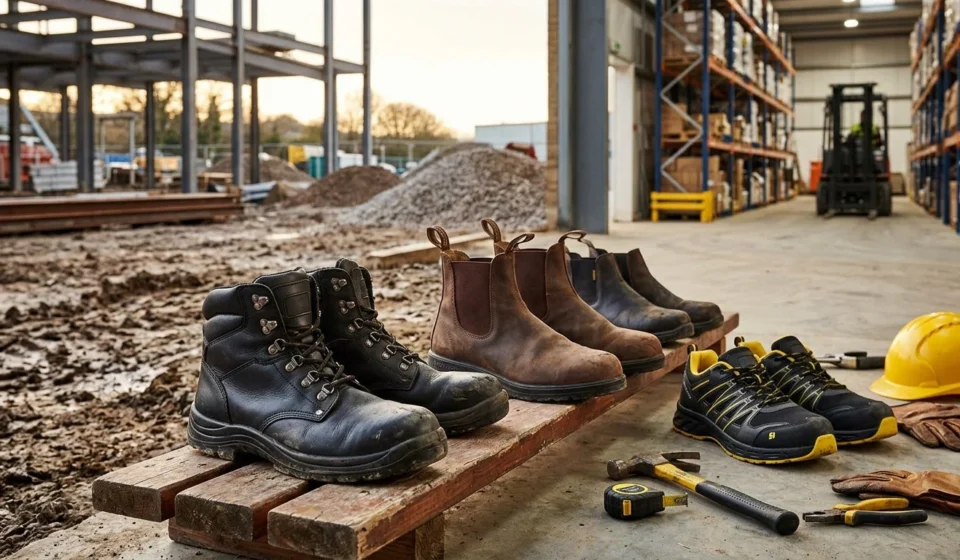

The right work boot isn’t simply the most popular option or the first one that fits. Choosing appropriate protective footwear depends on understanding what your workplace actually demands—and that understanding comes from clear organisation, communication and planning within your team or business. When workplaces clarify hazards, document requirements and share information effectively, individual workers and managers can make footwear decisions with confidence.
Disorganised workplaces often end up with mismatched footwear across teams. One employee wears boots unsuitable for their role; another discovers their chosen shoes lack necessary grip on oily surfaces; a third finds their protective footwear causes discomfort because nobody assessed the actual terrain or duration of standing involved. These problems multiply when roles, hazards and working conditions aren’t clearly communicated. Good organisation prevents this through straightforward planning.
Construction sites, warehouses, manufacturing facilities and engineering operations all present different ground conditions, hazard types and movement patterns. A site manager who has mapped out walking routes, identified slip hazards, documented electrical risks and noted temperature variations can guide their team toward appropriate choices. Whether workers need rigger boots with oil-resistant soles, safety trainers with extra ankle support, or Wellington boots for waterlogged areas, becomes clear when workplace requirements are properly understood.
Team communication also shapes better decisions. When supervisors discuss footwear needs during site inductions, when health and safety leads document specific hazard zones, and when experienced workers share what they’ve learned about comfort and durability in real conditions, newer or less experienced staff make better choices. Many workplaces benefit from establishing a preferred footwear list—not to restrict choice, but to ensure that anyone selecting boots understands why certain features matter for their role.
The practical investment makes sense too. Employees working in demanding environments—whether walking rough ground, standing for extended periods, or working where sharp objects and heavy items pose risks—need boots that support safety and comfort through a full working day. A work boot chosen thoughtfully for specific conditions lasts longer, performs better and reduces the likelihood of foot injuries that affect productivity and wellbeing. When organisations take time to match footwear to roles and conditions, rather than treating boots as a generic purchase, the difference becomes noticeable.
Seasonal variations also require organised thinking. Winter work demands different boot characteristics than summer roles. Wet conditions, snow and icy surfaces call for boots with enhanced grip and insulation. Summer work in warm environments might prioritise breathability and lighter weight. Workplaces that acknowledge these shifts and review footwear requirements seasonally help their teams stay comfortable and safer throughout the year. A worker wearing winter boots designed for grip and warmth in July’s heat will experience fatigue and reduced performance; equally, summer trainers offer insufficient protection in November’s wet conditions.
Matching Footwear to Specific Working Conditions
Understanding what the ground is actually like goes a long way. A factory floor with oil and chemical spills demands boots with slip-resistant soles designed for wet, greasy surfaces. A construction site with scaffolding, trenches and uneven ground requires different support and sole patterns. A warehouse with smooth, clean concrete allows a different approach to a railway environment where ballast, track sections and potential electrical hazards shape every safety consideration. Workplaces that document their conditions—surface types, temperature ranges, potential contact hazards—equip their teams to choose appropriately.
Footwear also matters differently depending on movement patterns. Roles involving constant walking require boots with good cushioning and support to prevent foot fatigue. Static positions, such as standing at a workbench or assembly line, demand different characteristics—adequate support but sometimes prioritising lighter weight to reduce lower-leg strain. Roles combining both patterns need boots that handle both demands reasonably well. When organisations understand their teams’ actual movement and duration, they guide toward footwear that performs in those circumstances.
Safety Features That Organised Workplaces Prioritise
Steel toe caps, composite safety toe caps, puncture-resistant soles and ankle reinforcement aren’t luxury features—they’re responses to genuine hazards. A well-organised workplace identifies which hazards apply to each role and ensures appropriate protection is selected. Not every role needs every safety feature; matching features to actual risk prevents unnecessary expense and often improves comfort because workers aren’t wearing irrelevant protection.
Electrical hazards in certain environments demand specific sole construction. Thermal protection matters in foundries and welding areas. Rigger boots suit roles involving heavy items and uneven ground. Chukka boots work well for certain trades requiring freedom of movement alongside reasonable protection. Workplaces that classify roles by hazard type and communicate this clearly help workers understand why specific boots serve them better than generic alternatives.
Durability and Comfort Within Working Systems
A quality boot chosen well lasts considerably longer than poorly selected footwear. Boots experiencing conditions they weren’t designed for deteriorate faster and fail to protect adequately. When workplaces commit to choosing boots suited to actual conditions, the investment yields better value over months and years of use. Workers also experience fewer discomfort issues when their footwear matches their role, which reduces fatigue and keeps them safer through a full shift.
Organised teams also establish replacement schedules and maintenance expectations. Boots need periodic inspection; protective features wear down; soles gradually lose grip. Workplaces that build these checks into their safety routines ensure footwear remains effective rather than discovering problems only when someone slips or feels inadequate protection.
Planning Footwear Across Growing or Changing Teams
As teams expand, roles shift or operations change, footwear requirements sometimes shift too. A workplace moving from indoor warehouse work to outdoor logistics requires different boots. A team adding new equipment or starting work in different environments needs boots suited to those conditions. Organised businesses review their footwear strategy when circumstances change, rather than assuming previous choices remain appropriate indefinitely. This prevents situations where new team members wear unsuitable boots because nobody reconsidered requirements after operational changes.
Businesses managing multiple roles or locations benefit from maintaining clear documentation of what each role requires. This consistency helps newer staff make sensible choices and allows managers to spot when someone might benefit from different footwear. It also simplifies procurement—when you know exactly what you need, purchasing becomes straightforward rather than ad-hoc.
Making Sustainable Footwear Choices
Choosing well reduces waste. Boots selected thoughtfully for their actual working environment last longer, perform better and ultimately represent better value than repeated replacements of unsuitable options. This approach supports both financial efficiency and practical sustainability—less frequent replacement means fewer resources consumed and less waste generated.
Many workers and employers appreciate having options when selecting boots. Different brands and styles serve different needs effectively. When an organisation clarifies what matters—safety features required, ground conditions, duration of wear, seasonal factors—workers can make informed choices from available options rather than guessing or defaulting to whatever appears first in a catalogue. This flexibility, combined with clear guidance about requirements, often produces better outcomes than prescriptive one-option-only approaches.
The foundational truth remains straightforward: organised workplaces that understand their conditions, communicate requirements clearly and guide their teams thoughtfully end up with better footwear decisions. Workers feel safer, more comfortable and more confident. Boots perform their intended function for longer. Injuries become less likely. Team productivity improves. These advantages flow from workplace organisation and thoughtful planning rather than expensive equipment or complicated systems. When everyone understands what the job actually demands, choosing a suitable work boot becomes a straightforward decision based on real information rather than guesswork.
Get in Touch:
Work & Wear Direct
Unit 18-20, Pembroke Business Centre, Gardiners Ln S, Basildon SS14 3HY
01702 553698
workandweardirect.co.uk